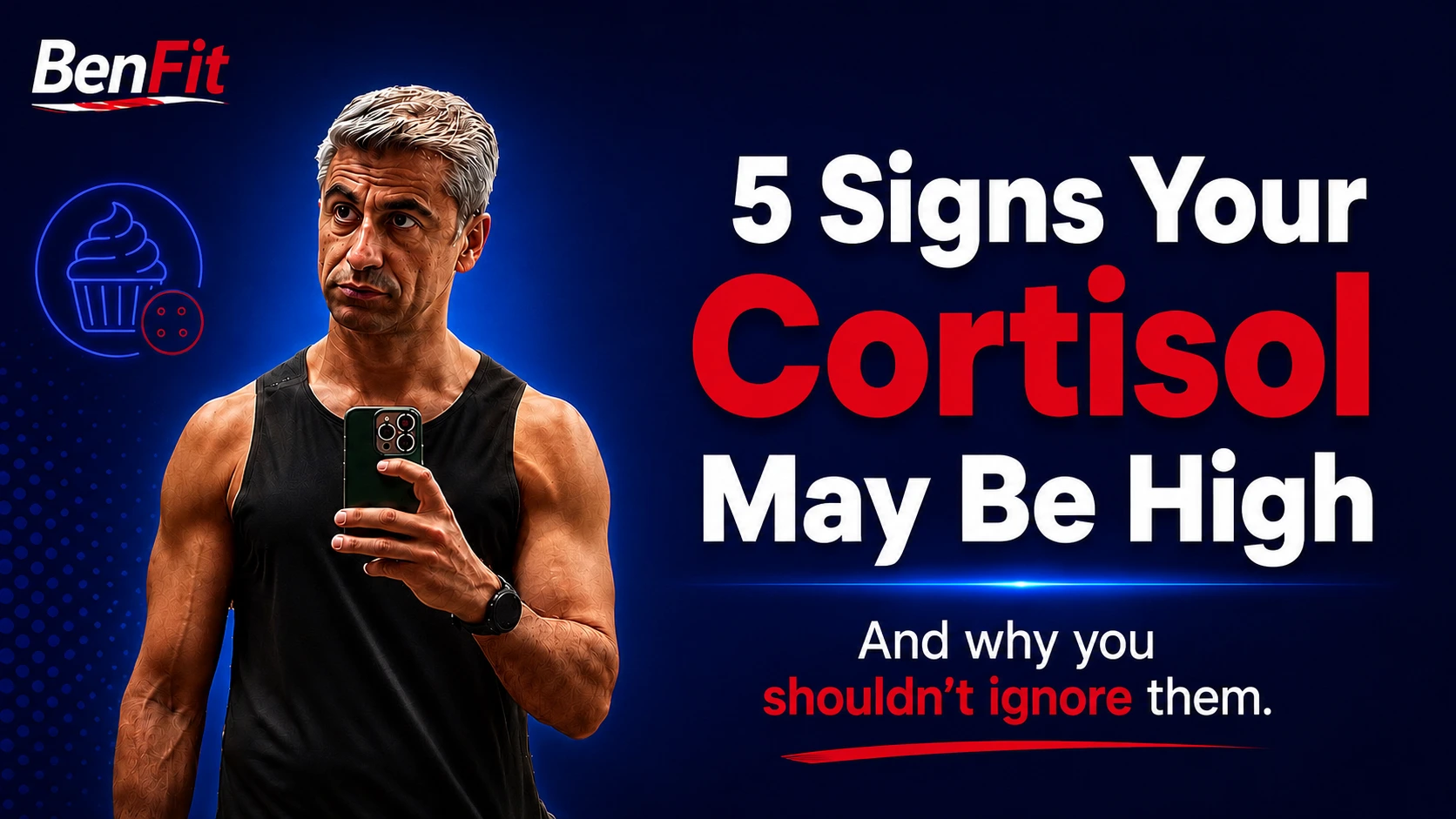
Cortisol is often called the “stress hormone,” but that does not mean cortisol is bad. Your body needs cortisol to respond to stress, regulate blood sugar, support blood pressure, control inflammation, and help turn food into energy. The problem starts when stress becomes chronic, sleep becomes poor, training recovery drops, and your body stays in a high-alert state for too long.
For many people, especially adults trying to lose belly fat or get back in shape after 40, the issue is not always lack of effort. They diet. They train. They try to stay consistent. But their body still feels tired, inflamed, hungry, stressed, and slow to change.
This article breaks down 5 signs of high cortisol that are easy to ignore — and what to do if stress is quietly holding back your fitness progress.
Medical note: This article is for education, not diagnosis. True cortisol disorders such as Cushing’s syndrome require medical testing and professional care. Cushing’s syndrome can cause weight gain, weak muscles, changes in fat distribution, high blood pressure, mood changes, and other symptoms, but it is a medical condition that should be assessed by a healthcare provider.
What Is Cortisol?
Cortisol is a hormone produced by the adrenal glands. It rises when your body needs to respond to stress, low blood sugar, illness, intense effort, or other physical and emotional demands. In a healthy rhythm, cortisol is usually higher in the morning and lower at night.
When stress is temporary, cortisol helps you perform. But when stress stays high for too long, it can affect sleep, appetite, mood, recovery, and energy. The National Institute of Mental Health notes that ongoing stress or anxiety can interfere with sleep and affect immune, digestive, cardiovascular, and reproductive systems.
1. Your Belly Fat Does Not Change, Even When You Diet
One of the most frustrating signs is this: you reduce calories, you try to eat cleaner, but your belly fat still does not move.
This does not automatically mean you have a cortisol disorder. Fat loss is controlled by calories, activity, muscle mass, sleep, stress, hormones, and consistency. But chronic stress can make the process harder because it can affect sleep, cravings, recovery, and food choices.
Clinically high cortisol, as seen in Cushing’s syndrome, is linked with weight gain and changes in fat distribution. The NIDDK lists weight gain, increased fat around the base of the neck, a fatty hump between the shoulders, weak muscles, and other symptoms among possible signs of long-term very high cortisol.
What to do
Do not only diet harder. Build a stress-aware fat-loss system:
- Do strength training 2–4 times per week.
- Eat enough protein at every meal.
- Walk daily.
- Sleep 7–9 hours when possible.
- Avoid extreme calorie restriction.
- Track waist size, energy, sleep, and training performance, not only scale weight.
The CDC recommends adults get at least 150 minutes of moderate-intensity activity per week and 2 days of muscle-strengthening activity each week.
2. You Crave Sweets More Than Usual
Another common sign of a stressed body is constant sugar cravings.
When stress is high, many people look for fast comfort: sweets, pastries, chocolate, cookies, or late-night snacks. This is not just about “weak willpower.” Stress can affect sleep, mood, appetite, and decision-making. When you are tired and stressed, high-sugar foods become much harder to resist.
The solution is not to shame yourself. The solution is to structure your meals so your body feels more stable.
What to do
Start with these four habits:
- Eat protein at every meal.
- Add fiber from vegetables, fruit, beans, lentils, oats, and whole foods.
- Drink enough water.
- Do at least 20–30 minutes of light activity daily.
USDA guidance emphasizes prioritizing whole, healthy, nutritious foods, and this supports the BenFit approach: make your meals more filling before trying to rely on discipline alone.
3. You Wake Up at 3 A.M. or Sleep Poorly
If you keep waking up in the middle of the night, struggle to fall asleep, or wake up tired, your recovery system may be under pressure.
Good sleep is essential for physical and emotional health. The CDC says adults generally need 7 or more hours of sleep per night, and sleep can support healthy weight, stress reduction, mood, heart health, metabolism, attention, and memory.
Poor sleep can also make fat loss harder because it affects energy, hunger, cravings, motivation, and training recovery.
What to do
Use a simple sleep reset:
- Keep a consistent sleep and wake time.
- Stop caffeine in the afternoon.
- Turn off screens at least 30 minutes before bed.
- Keep the bedroom cool, dark, and quiet.
- Avoid large meals and alcohol before bedtime.
- Do light stretching or breathing before sleep.
The CDC also recommends avoiding caffeine in the afternoon or evening, avoiding large meals and alcohol before bed, and turning off electronic devices at least 30 minutes before bedtime.
4. You Feel Nervous, Irritable, or Mentally “On Edge”
High stress can make your body feel like it is always ready for danger. You may feel restless, impatient, easily irritated, or mentally overloaded.
This matters for fitness because a stressed nervous system often leads to poor sleep, poor recovery, emotional eating, skipped workouts, and inconsistent routines.
NIMH explains that stress and anxiety can affect both the mind and body, and when symptoms interfere with daily life, feel always present, or cause avoidance, it is important to manage them and seek support when needed.
What to do
Your goal is not to “kill stress.” Your goal is to give your nervous system daily recovery signals:
- 5 minutes of slow breathing.
- 20–30 minutes of walking.
- Morning sunlight.
- Strength training without overtraining.
- Less late-night screen time.
- A consistent daily routine.
For BenFit clients, this is where coaching becomes valuable: training, nutrition, sleep, and stress management need to work together.
5. You Train and Diet, But Your Results Stay Slow
This is the sign most people ignore.
They assume the answer is more cardio, fewer calories, stricter dieting, or more supplements. But if your sleep is bad, protein is low, stress is high, and recovery is weak, your body may not perform at its best.
A smarter approach is to build the “BenFit foundation”:
- Strength training.
- Enough protein.
- Daily movement.
- Better sleep.
- Whole foods.
- Recovery days.
- Stress management.
Physical activity supports both physical and mental health, and the CDC notes that adults gain health benefits by moving more and sitting less — even if they are not perfect with their routine.
How to Lower Cortisol Naturally Through Lifestyle
You cannot control every stressor in life, but you can control the signals you give your body every day.
1. Strength Train, But Recover
Strength training helps preserve muscle, improve body composition, and support long-term health. But more is not always better. Train hard, then recover properly.
2. Eat Enough Protein
Protein helps you stay full and supports muscle repair. Add it to breakfast, lunch, and dinner.
Good options:
- Eggs
- Chicken
- Fish
- Lean meat
- Greek yogurt
- Cottage cheese
- Beans
- Lentils
- Tofu
- Protein powder when needed
3. Walk Daily
Walking is underrated. It helps with calorie burn, mood, blood sugar control, and stress regulation without adding heavy recovery stress.
4. Sleep Like It Is Part of the Program
Sleep is not separate from fitness. It is where recovery happens.
5. Stop Extreme Dieting
Very aggressive dieting can increase fatigue, cravings, and stress. A moderate, sustainable calorie deficit is usually more effective than short-term punishment.
6. Build a Calm Evening Routine
Your body should not go from phone, work, caffeine, stress, and bright light directly into sleep. Create a transition.
Try:
- Light stretching
- Breathing
- Reading
- Journaling
- Warm shower
- No phone for the last 30–60 minutes
When Should You See a Doctor?
If you have rapid unexplained weight gain, muscle weakness, easy bruising, wide purple stretch marks, round face, high blood pressure, blood sugar problems, severe fatigue, or symptoms that are getting worse, speak with a healthcare provider.
Cushing’s syndrome can be hard to diagnose because symptoms like fatigue and weight gain can have many causes. Doctors may use urine, saliva, or blood tests to evaluate cortisol when appropriate.
Final Thoughts
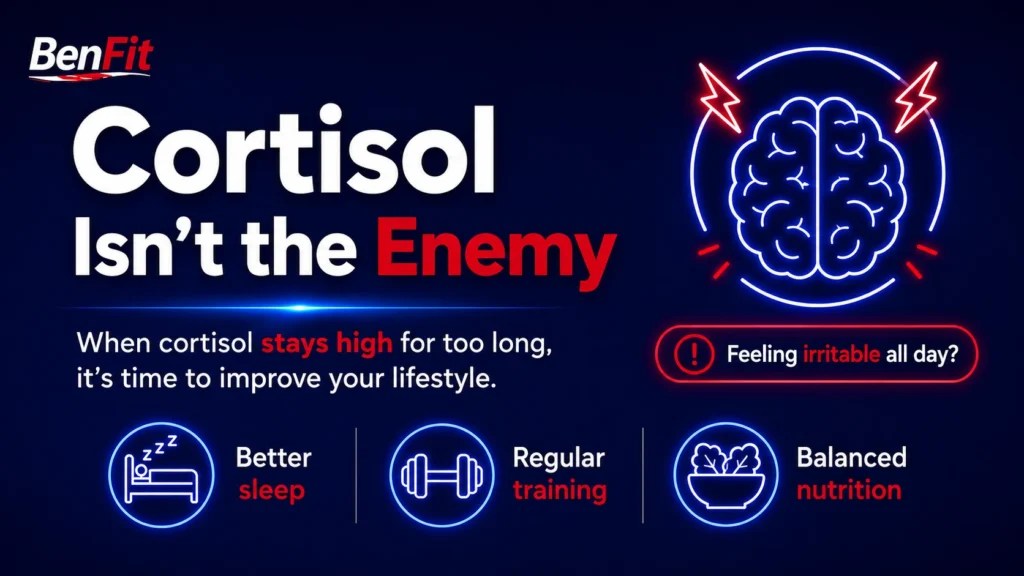
High cortisol is not something to panic about, but it is something to respect.
If your belly fat is stubborn, your cravings are high, your sleep is poor, your mood is tense, and your workouts are not giving you the results you expect, your body may not need more punishment. It may need a smarter system.
At BenFit, the goal is not just weight loss. The goal is to build a body that is stronger, calmer, more energetic, and easier to maintain.
Train smart. Eat enough protein. Sleep better. Walk daily. Recover properly.
That is how real transformation starts.