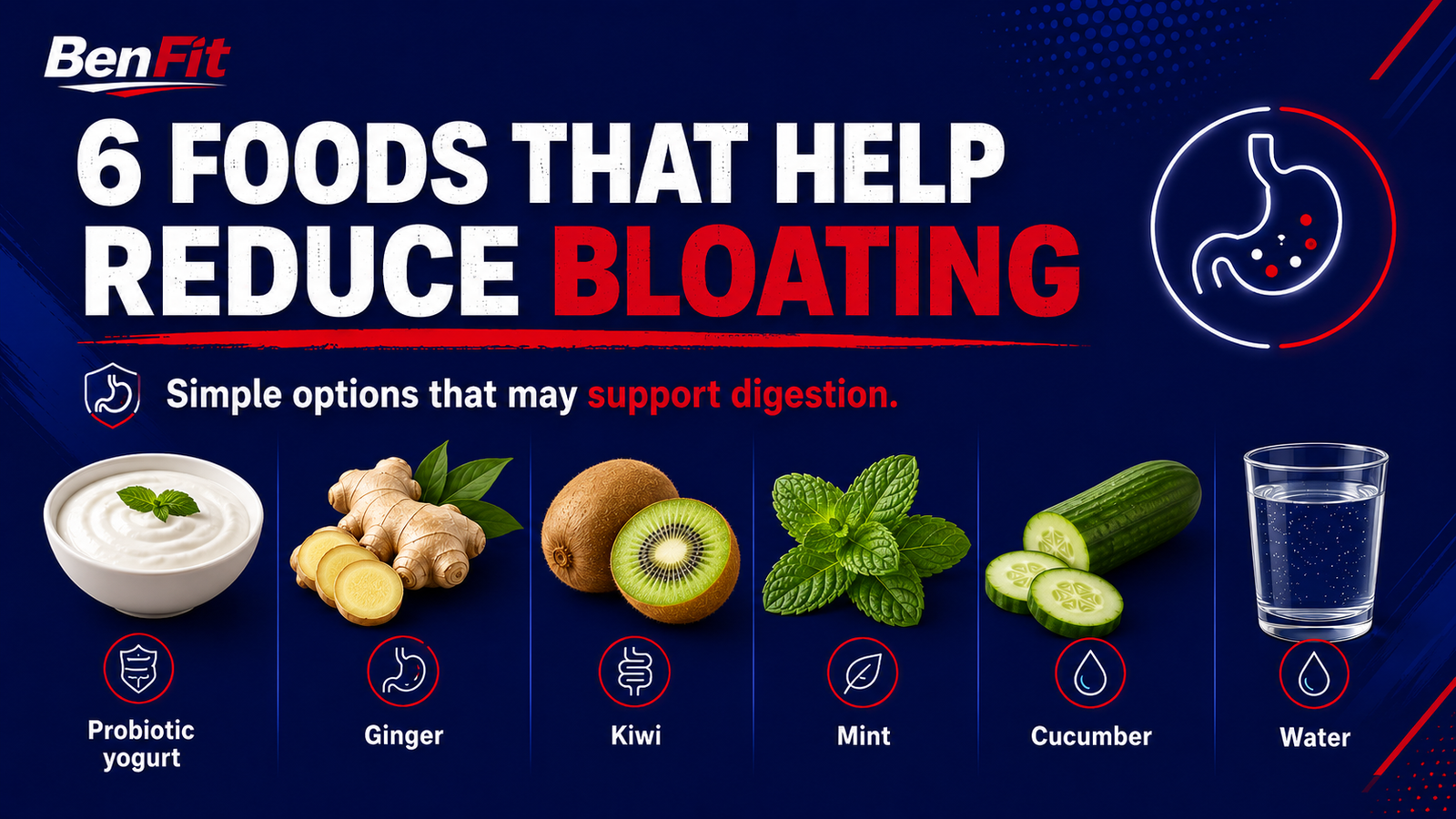
Quick answer: bloating is not always fat. It can be gas, water retention, constipation, large food volume, or digestive sensitivity. Some foods are healthy but still cause bloating in certain people. The solution is not to fear food. The solution is to identify your triggers and control portions, timing, and preparation.
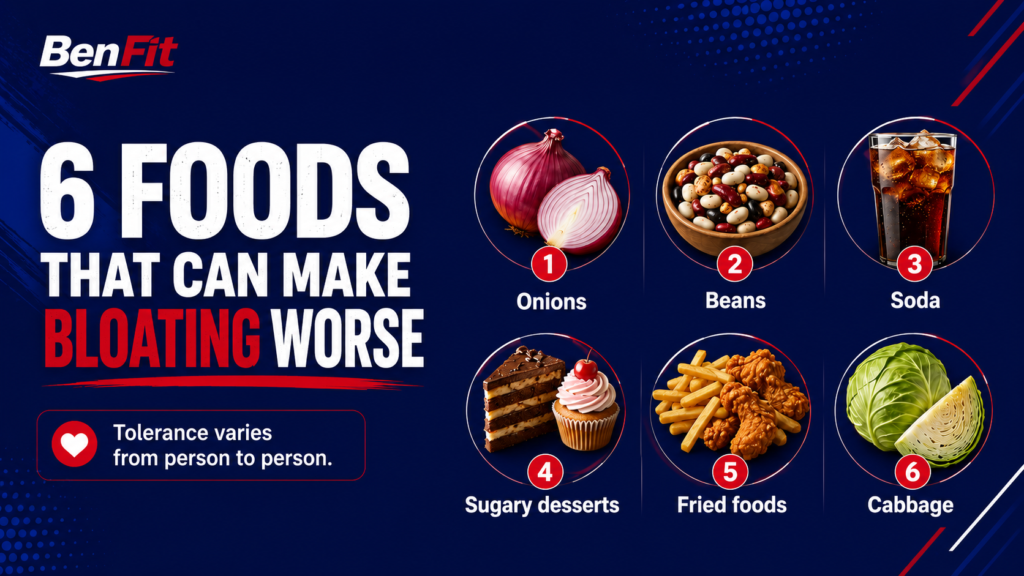
Six foods that may make bloating worse
| Food or drink | Why it may cause bloating | What to try instead |
|---|---|---|
| Onions | Fermentable carbohydrates can increase gas | Use chives, herbs, or smaller portions |
| Beans | Fiber and resistant starch can ferment | Rinse canned beans; start with small servings |
| Carbonated drinks | Gas enters the digestive tract | Flat water, herbal tea, or electrolyte water |
| Sugary desserts | Large sugar and fat loads can slow digestion | Protein-based dessert or fruit with yogurt |
| Fried foods | High fat can delay stomach emptying | Grilled, baked, or air-fried options |
| Cabbage family foods | Can produce gas in sensitive people | Cook them well and reduce portion size |
Healthy foods can still bloat you
A food can be nutritious and still create gas for you. Beans, cabbage, broccoli, onions, and high-fiber foods are not “bad.” They simply contain compounds that some people digest with more gas. The goal is to test tolerance, not remove every vegetable from your diet.
Portion size matters more than food morality
Many bloating problems come from oversized portions. A small amount of beans in a bowl may be fine. A huge bean-heavy dinner plus carbonated drinks plus dessert may not be. The body responds to total digestive load.
The 3-step trigger test
- Remove one likely trigger for 7 days: do not remove five foods at once.
- Reintroduce it in a small serving: test it when sleep and stress are normal.
- Track symptoms: note gas, pressure, bowel changes, and timing.
Bloating versus belly fat
Bloating changes during the day. Belly fat does not appear and disappear between breakfast and dinner. If your stomach is flatter in the morning and expands after meals, digestion and water retention are likely involved. If your waist measurement is consistently increasing over weeks and months, body fat may also be part of the picture.
| Sign | More likely bloating | More likely fat gain |
|---|---|---|
| Timing | Changes hour to hour | Changes over weeks or months |
| Feeling | Pressure, gas, tightness | Usually no gas pressure |
| Morning look | Often flatter | Similar day to day |
| Trigger | Meals, stress, constipation | Calorie surplus over time |
What to do this week
- Stop carbonated drinks for 7 days.
- Eat slower and chew more.
- Cook high-fiber vegetables instead of eating huge raw portions.
- Walk 10 minutes after your biggest meal.
- Track symptoms without obsessing over the scale.
When symptoms are not normal
If bloating comes with intense pain, blood in stool, vomiting, fever, sudden weight loss, persistent diarrhea, or ongoing constipation, get medical evaluation. Fitness and nutrition coaching can support habits, but it should not replace medical diagnosis.
BenFit takeaway
Do not label yourself as “fat” because your stomach feels bloated. First check digestion, sodium, carbonation, fiber, stress, sleep, and meal size. Then build a nutrition plan that supports fat loss without making your stomach miserable.
For a customized plan, visit BenFit online coaching.
Scientific sources and editorial notes
- American Academy of Dermatology: cellulite treatment overview and realistic expectations.
- MedlinePlus: cellulite, subcutaneous fat, and connective tissue basics.
- NIDDK: insulin resistance, gas, bloating, diet changes, and healthy lifestyle guidance.
- U.S. Physical Activity Guidelines: adult aerobic and muscle-strengthening recommendations.
- International Society of Sports Nutrition: protein and exercise position stand.
Medical note: This article is educational and does not replace medical care. If symptoms are severe, sudden, painful, or linked with bleeding, unexplained weight loss, chest pain, fainting, or persistent digestive changes, speak with a qualified health professional.